Commercial Waste Shortlands: Recycling and Sustainability
Commercial Waste Shortlands is committed to creating an eco-friendly waste disposal area and a thriving sustainable rubbish area across the Shortlands and surrounding boroughs. We work with local businesses, property managers and public sector partners to improve recycling outcomes, reduce landfill and demonstrate practical circular economy activity in a busy suburban setting. Our approach supports both Small and Medium Enterprises and larger commercial sites seeking reliable, low-impact waste solutions.Across Shortlands, our Shortlands commercial waste teams tailor collections to local policies and the boroughs' approach to waste separation. Many neighbouring boroughs now collect food waste, mixed dry recyclables and glass separately; we align our operations to maximise capture of paper, cardboard, plastics and organics at source. By coordinating with local waste authorities we reduce contamination at the kerb and strengthen the local infrastructure for reuse and material recovery.
 To reach our sustainability ambitions we set a clear recycling percentage target and report progress annually. Our current target is to achieve a 65% recycling rate for all Shortlands commercial waste streams by 2028, with interim milestones each year. Achieving that target relies on measured improvements: segregated streams, improved staff training for site waste managers, and smarter separation systems inside retail, leisure and office sites.
We use local transfer stations and material recovery facilities to keep the carbon cost of transport low. Our preferred local transfer stations are selected for proximity to Shortlands, operational hours that suit businesses, and strong downstream contracts for processing recycled material. Running collections to nearby facilities reduces mileage, shortens turnaround times and supports eco-friendly waste disposal area objectives for the community.
 Partnerships with charities are central to our sustainable rubbish area model. We collaborate with local reuse charities and social enterprises to divert items suitable for repair or resale — from office furniture to commercial-grade catering equipment. These partnerships create social value, reduce waste sent for disposal and support vulnerable groups by generating income streams and job opportunities for local people.
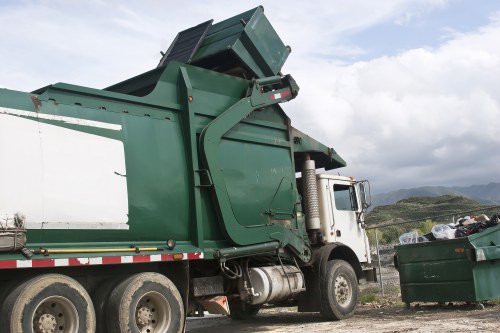
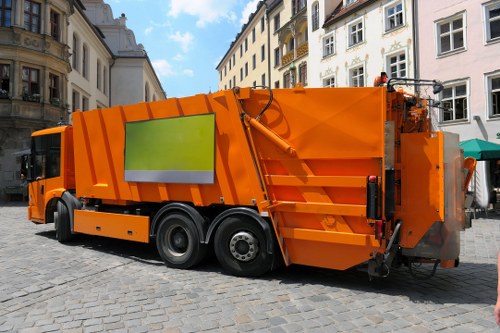
For fleet operations, we have introduced low-carbon vans and micro-hauliers where feasible. Our vehicle strategy reduces emissions through a mix of electric and hybrid vans on shorter urban rounds and cleaner Euro-6 diesel on longer routes. This reduces noise and air pollution in the Shortlands neighbourhood while maintaining reliable collections for businesses that depend on regular commercial waste services.
Practical steps for a sustainable rubbish area
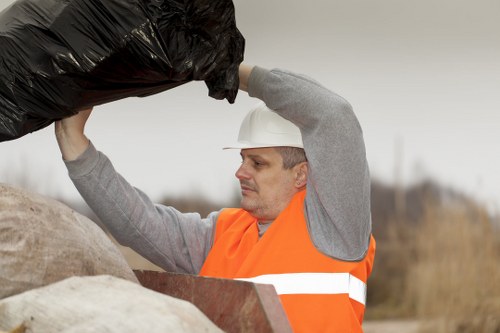
We advise businesses on simple, high-impact actions:- Segregate at source — provide dedicated bins for dry recyclables, glass and organics.
- Reduce contamination — clear signage and staff briefings reduce non-recyclables entering recycling bins.
- Reuse and donate — work with charity partners to move reusable stock out of premises.
We also monitor performance metrics to track progress against our recycling percentage target. Key performance indicators include tonnage diverted from landfill, percentage recycled, vehicle kilometers reduced and volumes directed to reuse partners. Transparent reporting helps businesses understand the benefits of improving their on-site segregation and switching to greener collection options.
Local context and borough collaboration
The success of any sustainable rubbish area depends on alignment with borough-level strategies. Shortlands sits within the borough’s broader waste reduction programme, which emphasises separate food waste collection, increased recycling participation and educational outreach. By coordinating collection schedules and materials acceptance with borough transfer stations and recycling centres, Shortlands' commercial waste services strengthen the local materials loop and make it easier for businesses to comply with local waste policies. For businesses seeking to reduce their environmental footprint, our service options include regular audits, tenancy-level recycling support and tailored collection frequencies that match trading patterns. We support initiatives such as back-of-house segregation in hospitality, dedicated cardboard compaction in retail, and organics capture for commercial kitchens. These focused interventions feed directly into the eco-friendly waste disposal area vision for Shortlands.
We maintain long-term partnerships with transfer stations, charities and processing facilities to ensure materials collected from Shortlands are processed responsibly. That network enables a reliable route for paper and cardboard to be recycled, for metals and plastics to be recovered, and for reusable items to be redirected to charities rather than being treated as waste. This integrated approach helps businesses meet regulatory expectations and community sustainability goals.
Our commitment to change is ongoing: from investing in low-carbon vans to expanding charity partnerships and refining collection routes, everything is designed to support a measurable increase in recycling rates and a resilient, local sustainable rubbish area. If you are part of the Shortlands commercial community and want to align with an efficient, low-impact waste partner, our operations provide a practical, scalable route to meet both environmental and business needs.
